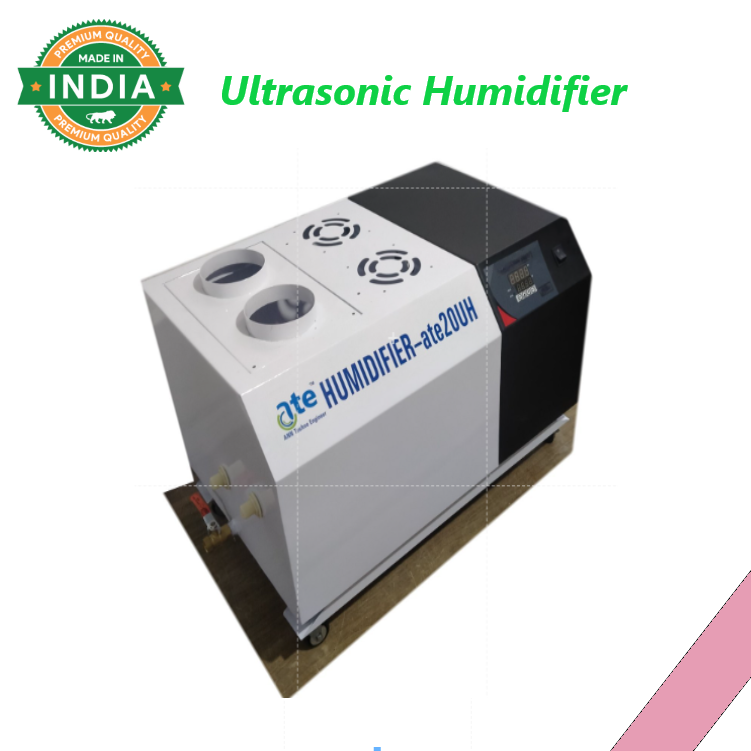
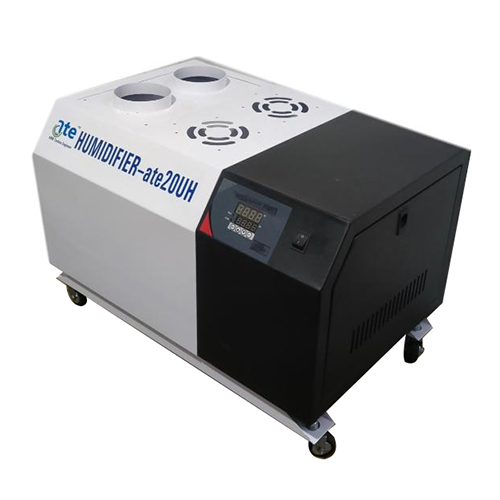
About Industrial Ultrasonic Humidifier
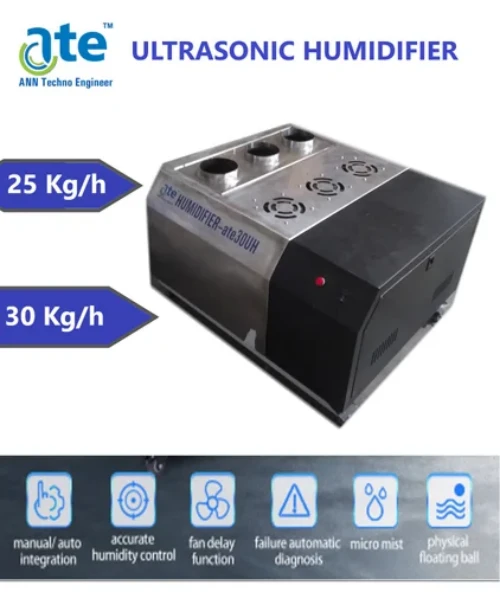
| Model | ate30UH |
| Humidification Capacity | 30Kg/hr. |
| Power Supply | 220VAC/50HZ |
| Power Input (w) | 1850W |
| Air Volume | 350m2/h |
| Control mode | Auto control, humidity display |
| Humidity control | 10% - 95% |
| Control precision | -/+ 3%RH |
| Control | Humidity |
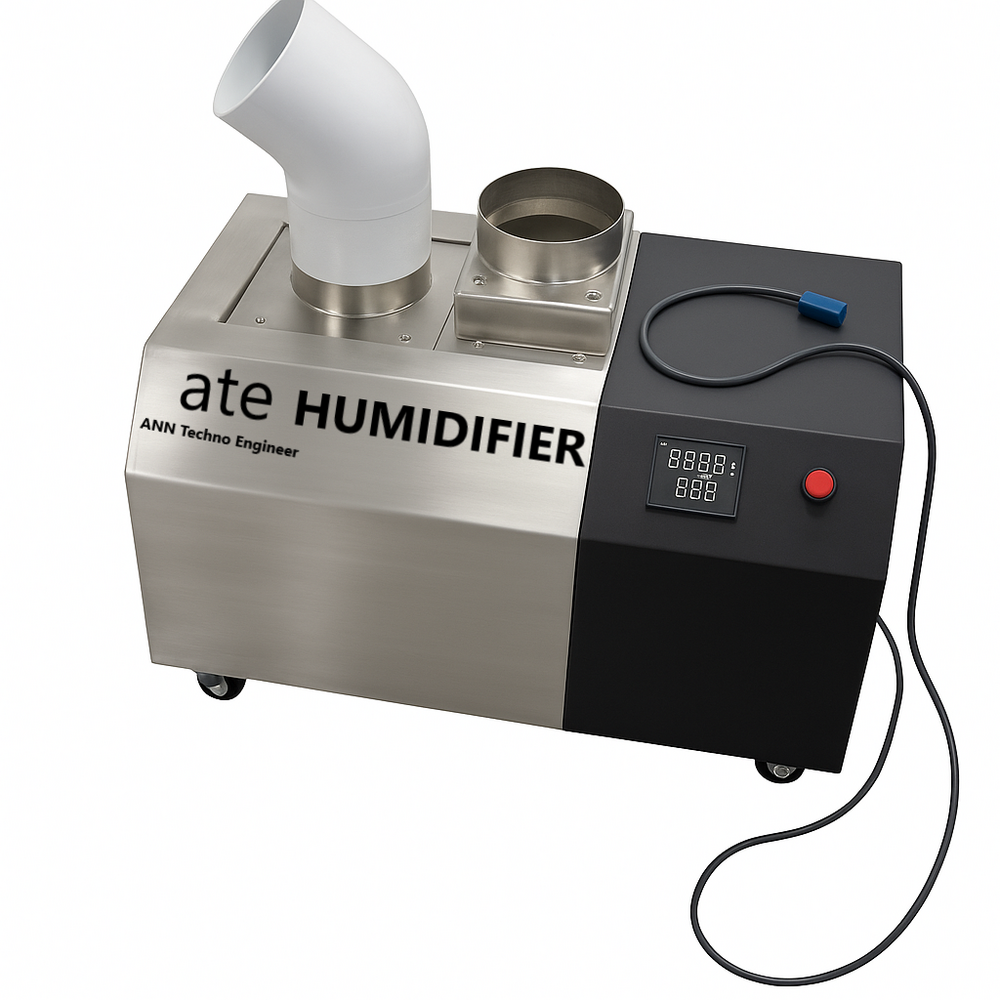
| Mist outlet | 110mm(Three PVC pipe outlet |
| Volume of water tank | 25 L |
| Way of water- | In automatic |
| Water Quality Required | Pure RO water <80%TDS |
| Weight | 65 Kg |
| Dimensions (mm) | 1000*750*600mm |
Special Features:
- Easy to install.
- Lowest energy consumption in its category.
- Size of water mist 1-6
- No condensation due to very fine water particle size.
- Humidity Indicator & Intelligent controller.
- Independent Humidification System
- Uniform distribution
- Timer (Optional)
- Uniformity humidification, the maximum humidity up to 99%.
Advanced Humidification TechnologyUtilizing ultrasonic vibration, this humidifier produces a fine mist for effective and uniform moisture distribution. It is designed for industrial-grade reliability and provides exceptional humidity control with minimal power consumption, ensuring an optimal environment for sensitive applications like textiles and greenhouses.
Smart and Versatile ControlsWith options for automatic and manual modes, operators can adjust humidity settings quickly using the digital control panel. The integrated humidistat enables precise regulation of air moisture levels, keeping the environment within desired parameters without constant supervision.
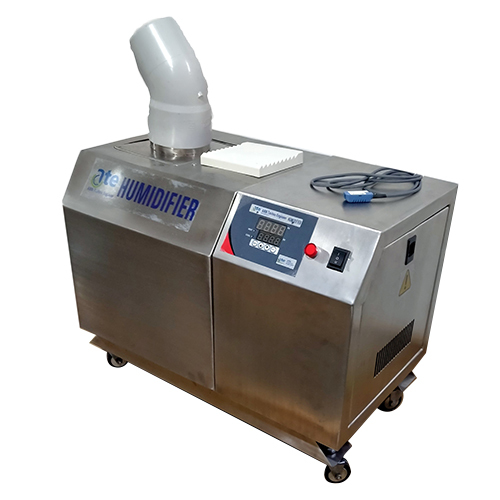
Robust Safety and Easy MobilityThoughtfully engineered with low water cutoff and overheat protection, this humidifier minimizes operational risks. Its stainless steel construction and caster wheels allow for effortless movement and placement in any industrial workspace, boosting both durability and convenience.
FAQ's of Industrial Ultrasonic Humidifier:
Q: How does the ultrasonic humidification process work in this industrial humidifier?
A: The unit uses ultrasonic vibration technology, which creates high-frequency oscillations to convert water into a fine mist. This mist is then released through a 110 mm outlet, effectively increasing moisture levels in spaces up to 300 m2 without generating excess heat.
Q: What installation requirements are needed for this floor-standing ultrasonic humidifier?
A: As a floor-standing device, it requires a stable, level surface within reach of a standard 220V/50Hz power supply. Thanks to its caster wheels, the humidifier is easy to move to the desired location in industrial, greenhouse, laboratory, or textile environments.
Q: Where can this humidifier be effectively used?
A: This model is ideal for various industrial settings, including greenhouses, textile manufacturing areas, and laboratories, especially where precise humidity regulation is crucial to product quality, plant health, or experimental integrity.
Q: What controls and settings are available for adjusting humidity levels?
A: The humidifier features an adjustable humidistat and digital control panel, allowing users to set and monitor humidity levels accurately. It also offers the flexibility of switching between fully automatic and manual operation for customized performance.
Q: When should I refill the water tank, and how much water does it hold?
A: The device is equipped with a 10-liter water tank. Depending on usage and selected mist output (3-12 L/hr), refilling frequency will vary. The unit's low water cutoff automatically halts operation to protect the system when the tank is empty.
Q: What benefits does this ultrasonic humidifier offer over traditional methods?
A: Ultrasonic technology ensures energy-efficient, low-noise, and fast humidification. The fine mist distribution prevents water droplets from settling, supporting even moisture distribution while minimizing power consumption and maintenance needs.
Q: How does the humidifier ensure safe and reliable operation?
A: Safety features include a low water cutoff, which stops the unit when the water is depleted, and overheat protection to prevent damage during extended use. These safeguards help maintain consistent and safe operation, especially in demanding industrial settings.
Technical Details 






 Send Inquiry


 Send Inquiry